

Vertraut von 100+ Expats
in ganz Deutschland
Ungebundene Rentenberatung
Private Altersvorsorge Deutschland richtig geplant,ohne Rätselraten
Erstellt mit KI
Zugang zum Gesamtmarkt
Christian vergleicht Anbieter am gesamten Markt — nicht nur das Angebot eines einzelnen Versicherers.
Ungebunden per Gesetz
Zugelassen nach §34d GewO — die Beratung richtet sich nach Ihrer Situation, nicht nach einer Verkaufsquote.
Englisch, von Anfang bis Ende
Jedes Dokument, jedes Gespräch — verständlich auf Englisch erklärt.

Was ist eine private Altersvorsorge für Expats?
Germany’s state pension rarely covers the life you’re planning for. Most
Expats kommen oft erst mitten in ihrer Karriere nach Deutschland, wodurch sich die angerechneten Jahre verkürzen. STAT LINE: ~1.913 €/Monat — Nach 45 Beitragsjahren mit Durchschnittsverdienst zahlt die gesetzliche Rente rund 1.913 €/Monat. Die wenigsten Expats erreichen auch nur annähernd 45 Beitragsjahre
Eine private Altersvorsorge in Deutschland hilft Ihnen, zusätzliches Alterskapital neben der gesetzlichen Rente aufzubauen. Das ist besonders wichtig für Expats, die erst später in ihrer Karriere nach Deutschland ziehen und dadurch weniger Beitragsjahre in der gesetzlichen Rentenversicherung ansammeln. Eine private Altersvorsorge kann helfen, diese mögliche Rentenlücke zu schließen und gibt Ihnen gleichzeitig mehr Kontrolle darüber, wie Sie für die Zukunft sparen und investieren.
Mehr aufbauen als nur die gesetzliche Rente
Schaffen Sie zusätzliches Alterseinkommen, statt sich allein auf die gesetzliche Rente zu verlassen.
Wählen Sie eine Altersvorsorge, die zu Ihren Plänen passt
Vergleichen Sie Kosten, Flexibilität und Anlageoptionen, bevor Sie sich langfristig binden.
Echte Expats, echte Entscheidungen zur privaten Altersvorsorge in Deutschland
Ein paar Worte von Menschen, die ihre Rentenlücke endlich verstanden und
und etwas dagegen unternommen haben.


Super. Nur gute Erfahrungen gemacht. Super Kundenservice. Netter Mensch und kompetente Beratung

Kompetente Beratung ohne Schnickschnack
Eigentlich hatte ich mir vorgenommen, hier ein lyrisches Meisterwerk als Rezession zu hinterlassen, aber mit Fakten ist man hier besser bedient Das Thema Versicherungen war für mich immer eine Blackbox und ich habe es jahrelang vor mir hergeschoben, was natürlich auch nicht zielführend war. Chris konnte viel Licht in den dichten Versicherungsnebel bringen, hat mir alles super geduldig und ausführlich erklärt und mir die bestmöglichen Versicherungsoptionen angeboten. Kein Schnickschnack, kein unnötiger Quatsch. Super kompetent, prima Beratung und bei insure-Germany ist man einfach gut aufgehoben. Merci!
- § 34d GewO Zugelassener Versicherungsmakler
- IHK-registriert im Vermittlerregister
- Berufshaftpflicht wie gesetzlich vorgeschrieben abgeschlossen
- DSGVO-konform — Ihre Daten werden nicht weiterverkauft
Erstellt mit KI
insure-Germany
Christian Keller · ungebundener Versicherungsmakler, Mannheim
- Ungebundene Beratung
- Langfristige Planung
Rentenberatung, die wirklich zu Ihrem Zeitplan passt
Pension advice isn’t a one-off policy check — it’s a decades-long relationship.
Christian isn’t tied to any insurer, so the plan fits you, not a quota. Every recommendation is explained in the open: what it costs, what it doesn’t guarantee.
Advice stays free — he’s paid by commission, not by you.
- Herstellerneutraler Vergleich von Rürup, Basisrente und betrieblicher Altersvorsorge
- Ein klares Bild Ihrer persönlichen Rentenlücke, in Zahlen, die Sie verstehen
- Laufende Überprüfung, wenn sich Ihr Einkommen, Ihr Aufenthaltsstatus oder Ihre Pläne ändern
Unverbindlich und kostenlos — nur Klarheit darüber, wo Sie stehen.
Kennen Sie Ihre Rentenlücke schon heute
Ein kurzes, kostenloses Gespräch zeigt genau, wo Ihre Altersvorsorge in Deutschland aktuell steht.
Brauchen Expats in Deutschland eine private Altersvorsorge?
Die meisten Expats erhalten am Ende eine kleinere gesetzliche Rente als Deutsche,
die ihr gesamtes Erwerbsleben hier gearbeitet haben — einfach weil weniger Beitrags-
jahre eine kleinere Rente bedeuten. Wenn Sie mit Anfang 30 oder später kamen, kann diese
Rentenlücke bis zum Renteneintrittsalter erheblich werden.
A private pension in Germany doesn’t replace the state system — it closes
die Lücke, die sie hinterlässt. Ob das nun eine Rürup-Rente ist, ein
ETF-based plan, or your employer’s company pension, the right mix depends
von Ihrem Einkommen, Ihren Aufenthaltsplänen und davon ab, wie lange Sie bleiben möchten.
Nicht Pflicht
Aber allgemein als unverzichtbar angesehen
Wenige € / Monat
Typischer Einstiegspreis
Deutscher Name
Private Altersvorsorge (Rürup / Riester / bAV)
Für wen
Jeder, der in Deutschland lebt — Angestellte, Freiberufler, Selbstständige, Expats
Pflicht?
Nein (nur die gesetzliche Rente ist für Angestellte Pflicht)
Steuervorteil
Rürup: bis zu 30.826 €/Jahr voll absetzbar (2026, Alleinstehende)
Renteneintrittsalter
67 (Jahrgang 1964+); frühestmögliche private Auszahlung ab 62
Risiko einer Rentenlücke
Hoch bei Expats mit weniger als 30 Beitragsjahren
Wer braucht eine private Altersvorsorge in Deutschland?
Germany’s state pension was built for people who contribute for decades.
Ist Ihr Erwerbsleben hier kürzer oder liegt Ihr Einkommen über dem Durchschnitt,
the maths simply doesn’t stretch as far — and that’s true whether you’re
angestellt, selbstständig oder irgendetwas dazwischen sind.
Angestellte
Die gesetzliche Rente alone rarely covers 48% of your previous net income for long, and that’s assuming a full contribution history. If you’re employed, your employer must offer you access to a betriebliche Altersvorsorge (company pension) and add at least 15% on top of what you pay in — a straightforward way to build retirement savings without much extra effort on your part.
Freelancer und Selbstständige
Freelancer und Selbstständige sind in der Regel überhaupt nicht in die gesetzliche Rentenversicherung eingebunden, wodurch die Altersvorsorge vollständig in der eigenen Verantwortung liegt. Die Rürup-Rente (Basisrente) ist hier das wichtigste Instrument: Beiträge sind bis zu 30.826 € im Jahr voll steuerlich absetzbar — ein natürlicher Fit für alle mit unregelmäßigem oder höherem selbstständigen Einkommen.
Expats, die später im Leben nach Deutschland kamen
Arriving in Germany in your 30s or 40s often means accumulating only 20–25 years of state pension contributions instead of a full career’s worth. That shorter contribution history translates directly into a smaller monthly payout at retirement age — and a wider pension gap that private pension planning needs to address earlier rather than later.
Früh anfangen verändert alles
Die Rentenlücke wächst still
Jedes Jahr ohne zusätzliche Altersvorsorge vergrößert sich die Lücke zwischen Ihrem erwarteten Einkommen und Ihrer tatsächlichen gesetzlichen Rente — oft unbemerkt, bis der Ruhestand nahe ist.
Steuervorteile, die Ihnen beim Warten entgehen
Rürup-Beiträge sind bis zu 30.826 € im Jahr steuerlich absetzbar. Wer wartet, verliert nicht nur Sparzeit — sondern auch Jahre an Steuervorteilen, die sich nicht nachholen lassen.
Zinseszinseffekt — Zeit ist Ihr größter Vorteil
Altersvorsorge, die Sie mit Anfang 30 beginnen, hat Jahrzehnte Zeit zu wachsen. Die gleichen Beiträge, später gestartet, haben schlicht weniger Zeit für den Zinseszinseffekt — unabhängig von der erzielten Rendite.
Welcher Altersvorsorge-Weg passt zu Ihrer Situation?
Deutschland bietet mehrere Wege zur privaten Altersvorsorge, und der richtige hängt
on your situation rather than a single “best” answer. Rürup (Basisrente)
eignet sich für Selbstständige und Gutverdiener, die maximale steuerliche
Absetzbarkeit möchten und langfristig im deutschen Steuersystem bleiben wollen.
Riester eignet sich gut für Angestellte mit Kindern dank staatlicher Zulagen,
though it’s less suited to expats who may leave Germany before
Ruhestand, da Zulagen zurückgezahlt werden müssen. ETF-basierte private
bieten Flexibilität und Wachstumspotenzial ohne staatliche
Beteiligung — attraktiv für alle, die mit marktgebundenen Produkten vertraut sind.
Klassische (garantierte) Tarife eignen sich für alle, die Planbarkeit wichtiger nehmen als
Wachstum. Ihr Beschäftigungsstatus, Ihre Steuerklasse und — entscheidend — ob
Sie planen, bis zum Renteneintrittsalter in Deutschland zu bleiben — all das bestimmt, welche Option
passt.
10–30+ Jahre
Langfristig denken, flexibel bleiben.
Private Altersvorsorgepläne laufen oft jahrzehntelang — deshalb zählen Kosten, Anlageflexibilität und was passiert, wenn Sie Deutschland verlassen, genauso wie die prognostizierte Rendite.
Worauf Sie bei einem Vorsorgeplan achten sollten
- Steuerliche Absetzbarkeit der Beiträge
- Portabilität, falls Sie Deutschland verlassen
- Flexibilität, Zahlungen zu pausieren oder anzupassen
- Niedrige laufende Kosten
- Transparente Kostenstruktur
- Auswahl der zugrunde liegenden Anlagen
- Garantierte versus fondsbasierte Renditen
- Klare Bedingungen für die Vertragskündigung
Comparing these details across providers is the actual work — and it’s what the free advice is for. As an independent broker, we’re paid via commission already included in the product cost, so checking the fine print costs you nothing.
Was ein guter Vorsorgeplan für Sie leistet
- Abgedeckt
Alterseinkommen zusätzlich zur gesetzlichen Rente aufbauen
Eine private Altersvorsorge schafft im Ruhestand eine zweite (oder dritte) Einkommensquelle, die zusätzlich zur gesetzlichen Rente kommt.
- Abgedeckt
Steuerlich absetzbare Beiträge, die Ihre jährliche Steuerlast senken
Rürup-Beiträge sind bis zu 30.826 € im Jahr absetzbar (2026, Alleinstehende), was Ihr zu versteuerndes Einkommen senkt, während Sie langfristig Altersvorsorge aufbauen.
- Abgedeckt
Portable Altersvorsorge, die Sie begleitet, falls Sie Deutschland verlassen
Anders als Riester hat die Rürup-Rente keine Rückzahlungspflicht für Zulagen — sie bleibt also Ihre, auch wenn Ihre Karriere Sie später woanders hinführt.
- Abgedeckt
Zuschuss zur betrieblichen Altersvorsorge von Ihrem Arbeitgeber (bAV)
Arbeitgeber müssen eine betriebliche Altersvorsorge anbieten und mindestens 15 % zu Ihrem eigenen Beitrag hinzufügen — das erhöht effektiv Ihre Sparquote.
Was eine private Altersvorsorge nicht leistet
Übliche Ausschlüsse, die Sie kennen sollten, bevor Sie sich auf eine Police verlassen.
Kurzfristige Sparziele
Private Altersvorsorge ist für den Ruhestand gedacht, nicht für die Anzahlung fürs Haus oder einen Urlaub in ein paar Jahren.
Garantiert hohe Renditen
Kein Vorsorgeprodukt kann ein bestimmtes Anlageergebnis garantieren — die Rendite hängt vom jeweiligen Tarif und den Marktbedingungen ab.
Vorzeitige Auszahlung vor dem Renteneintrittsalter
Das Kapital ist in der Regel bis mindestens Alter 62 gebunden — eine private Altersvorsorge ist also keine Quelle für kurzfristig verfügbares Geld.
Den Ersatz einer echten Berufsunfähigkeitsversicherung (BU)
Eine private Altersvorsorge baut Alterseinkommen auf; sie schützt Sie nicht, wenn Krankheit oder Berufsunfähigkeit Sie vorher an der Arbeit hindern.
Rürup vs. Riester vs. betriebliche Altersvorsorge (bAV)
Three pension routes that work differently. Here’s how they compare.

Rürup (Basisrente)
Riester
Betriebliche Altersvorsorge (bAV)
Am besten geeignet für
Selbstständige, Freiberufler, Gutverdiener
Angestellte, besonders mit Kindern
Angestellte bei Unternehmen, die sie anbieten
Steuervorteil
Bis zu 30.826 €/Jahr voll
Zulagen + mögliche Steuer-
Beiträge können steuerlich bzw. sozialversicherungsrechtlich begünstigt sein
Portabel ins Ausland?
In der Regel portabel
⚠ Eingeschränkt — bei einem Umzug ins Ausland können Förderkonsequenzen entstehen
Abhängig von Anbieter & Vertrag
Arbeitgeberzuschuss
Nein, aber allgemein üblich
Nein
Nein
Früheste Auszahlung
Alter 62
In der Regel ab Alter 62
Abhängig vom Tarif und den geltenden Regelungen zum Renteneintritt
Flexibilität
Niedrig — für den Ruhestand konzipiert
Niedrig — abhängig von den Förderbedingungen
Moderat — abhängig von Beschäftigung und Tarif
Viele Menschen kombinieren zwei oder alle drei. In einem kostenlosen Gespräch klären wir, welcher
Mix zu Ihrem Einkommen, Ihrer Steuersituation und Ihren Aufenthaltsplänen passt.
Wie private Altersvorsorge in Deutschland funktioniert
The practical details behind your options — kept short. Open only what’s relevant to you.
Wie funktioniert das deutsche Rentensystem eigentlich?
Deutschland hat ein Drei-Säulen-Rentensystem: die staatliche Rente
(gesetzliche Rente), die Betriebsrente (betriebliche
Altersvorsorge) und die private Altersvorsorge. Nach 45 Jahren mit Durchschnittsverdienst
Beitragsjahren zahlt die gesetzliche Rente rund 1.913 €/Monat (Stand Juli 2026) —
rund 48 % des letzten Nettoeinkommens. Die meisten Menschen brauchen die anderen
beiden anderen Säulen, um ihren Lebensstandard zu halten.
Was ist die Rürup-Rente (Basisrente) und für wen ist sie geeignet?
Die Rürup-Rente ist vor allem für Selbstständige und
Freelancer, who typically aren’t part of the state pension system.
Beiträge sind bis zu 30.826 € im Jahr voll steuerlich absetzbar (2026,
Alleinstehende). Wenn Sie 2026 in Rente gehen, sind 84 % der Rente steuerpflichtig — ein Anteil, der
schrittweise auf 100 % bis 2058.
Kann ich meine deutsche Rente mitnehmen, wenn ich das Land verlasse?
It depends on the product. A Rürup pension is portable — there’s no
Rückzahlung von Zulagen, falls Sie ins Ausland ziehen, anders als bei Riester. Die gesetzliche Rente
Beiträge bleiben im Rahmen internationaler Abkommen in der Regel erhalten,
auch wenn die Auszahlungsmodalitäten je nach Land variieren. Diese Portabilität macht
Rürup zu einer beliebten Wahl für Expats bei der Altersvorsorgeplanung, die nicht dauerhaft in
Deutschland bleiben.
Wie viel sollte ich für den Ruhestand in Deutschland sparen?
There’s no single figure — it depends on your income, expected gesetzliche
Rente, and how many contribution years you’ll accumulate. Someone
mit 20 bis 25 Beitragsjahren in Deutschland steht in der Regel vor einer größeren
Rentenlücke als jemand mit einer vollen Erwerbsbiografie hier — ein Makler kann
helfen, die Lücke anhand Ihres konkreten Zeitplans einzuschätzen.
Was passiert mit meiner gesetzlichen Rente, wenn ich nur wenige Jahre hier arbeite?
Ihre eingezahlten Beiträge gehen nicht verloren — sie zählen für Ihre spätere
gesetzliche Rente, selbst bei einer kurzen Zeit in Deutschland. Allerdings bedeuten weniger
Beitragsjahre bedeuten eine entsprechend kleinere monatliche Rente, weshalb
ist genau der Grund, warum private Altersvorsorge umso wichtiger wird, je
kürzer Ihre Zeit im gesetzlichen System ist.
Ist die Rentenberatung durch einen Makler wirklich kostenlos?
Ja. Als ungebundener Makler nach §34d GewO, wird Christian Keller
über die Courtage des Versicherers vergütet, die bereits im
product cost. You don’t pay a separate advisory fee for the initial
Beratung und Empfehlung.
Beratung, die für Sie arbeitet — nicht für den Versicherer
Three different policies that expats often mix up. Here’s what each one actually does.
Verglichene Versicherer
Marktweiter Blick statt einer einzelnen Produktlinie — wir vergleichen Absicherung und Konditionen, nicht nur den Preis.
Zugelassener Makler
Eingetragener Versicherungsmakler nach § 34d GewO — rechtlich Ihr Vertreter, nicht der Verkäufer des Versicherers.
Beratung ist kostenlos
Makler werden über die Courtage vergütet, die ohnehin im Beitrag enthalten ist. Ihre Absicherung kostet dasselbe, mit oder ohne uns.
Unterstützung auf Englisch
Einrichtung, Unterlagen und Leistungsfälle auf Englisch oder Deutsch abgewickelt — was für Sie einfacher ist.
Persönlicher Ansprechpartner
Eine Person, die Ihren Vorgang kennt — vom ersten Gespräch bis zum Leistungsfall Jahre später.
Beratene Kunden
Fügen Sie Ihre echte Zahl ein, sobald verfügbar — eine verifizierte Kundenzahl schafft hier starkes Vertrauen.
Private Altersvorsorge in Deutschland — FAQ
Ist eine private Altersvorsorge in Deutschland Pflicht?
Nein. Nur die gesetzliche Rente ist für Angestellte Pflicht. Private
wie Rürup, Riester, oder ETF-basierte Pläne sind freiwillige Ergänzungen
die helfen, die Rentenlücke zu schließen, die das gesetzliche System allein hinterlassen kann.
Was ist der Unterschied zwischen Rürup und Riester?
Rürup bietet größere steuerliche Vorteile (bis zu 30.826 €/Jahr) und volle
Portabilität ins Ausland und eignet sich für Selbstständige und Gutverdiener. Riester
bietet staatliche Zulagen für Angestellte mit Kindern, birgt aber
ein Rückforderungsrisiko, falls Sie Deutschland vor dem Ruhestand verlassen.
Wie viel kann ich mit einer Rürup-Rente von der Steuer absetzen?
Im Jahr 2026 können Alleinstehende bis zu 30.826 € pro Jahr an
Rürup-Beiträge, reduziert das zu versteuernde Einkommen. Wenn Sie 2026 in Rente gehen, sind 84 %
der daraus resultierenden Rente sind steuerpflichtig — ein Anteil, der jährlich auf
100 % bis 2058.
Kann ich eine private Altersvorsorge mit meiner betrieblichen Altersvorsorge kombinieren?
Ja. Betriebliche Altersvorsorge, Rürup, Riester und private
können alle nebeneinander bestehen. Viele Menschen kombinieren eine betriebliche
Altersvorsorge für den Arbeitgeberzuschuss mit einer Rürup-Rente oder einem privaten Plan für
zusätzliche steuerlich absetzbare Altersvorsorge.
Was, wenn ich nur wenige Jahre in Deutschland bin?
Ihre Beiträge zur gesetzlichen Rente zählen weiterhin, auch wenn weniger Jahre
eine kleinere Auszahlung. Eine Rürup-Rente bleibt portabel, ohne dass eine Förderung
Rückforderung, weshalb sie auch bei einem kürzeren Aufenthalt eine Überlegung wert ist — Riester
ist in diesem Fall in der Regel weniger geeignet.
Ist eine private Altersvorsorge sinnvoll, wenn ich bereits in ETFs investiere?
Sie kann Ihre ETF-Investments ergänzen statt sie zu ersetzen. Eine
Rürup-Rente bietet eine steuerliche Absetzbarkeit, die ein reines ETF-Investment
doesn’t offer, while ETF-based pension products combine market exposure
mit der Struktur eines formellen Vorsorgeplans.
Zahle ich Ihnen etwas für die Rentenberatung?
Keine gesonderte Gebühr. Als ungebundener Makler (§34d GewO), wird Christian
Keller über die Courtage des Versicherers vergütet, die bereits
into the product’s cost — so the advice itself is free to you.
Absicherung, die Expats häufig gleich mit klären neben
Bild erstellt mit KI
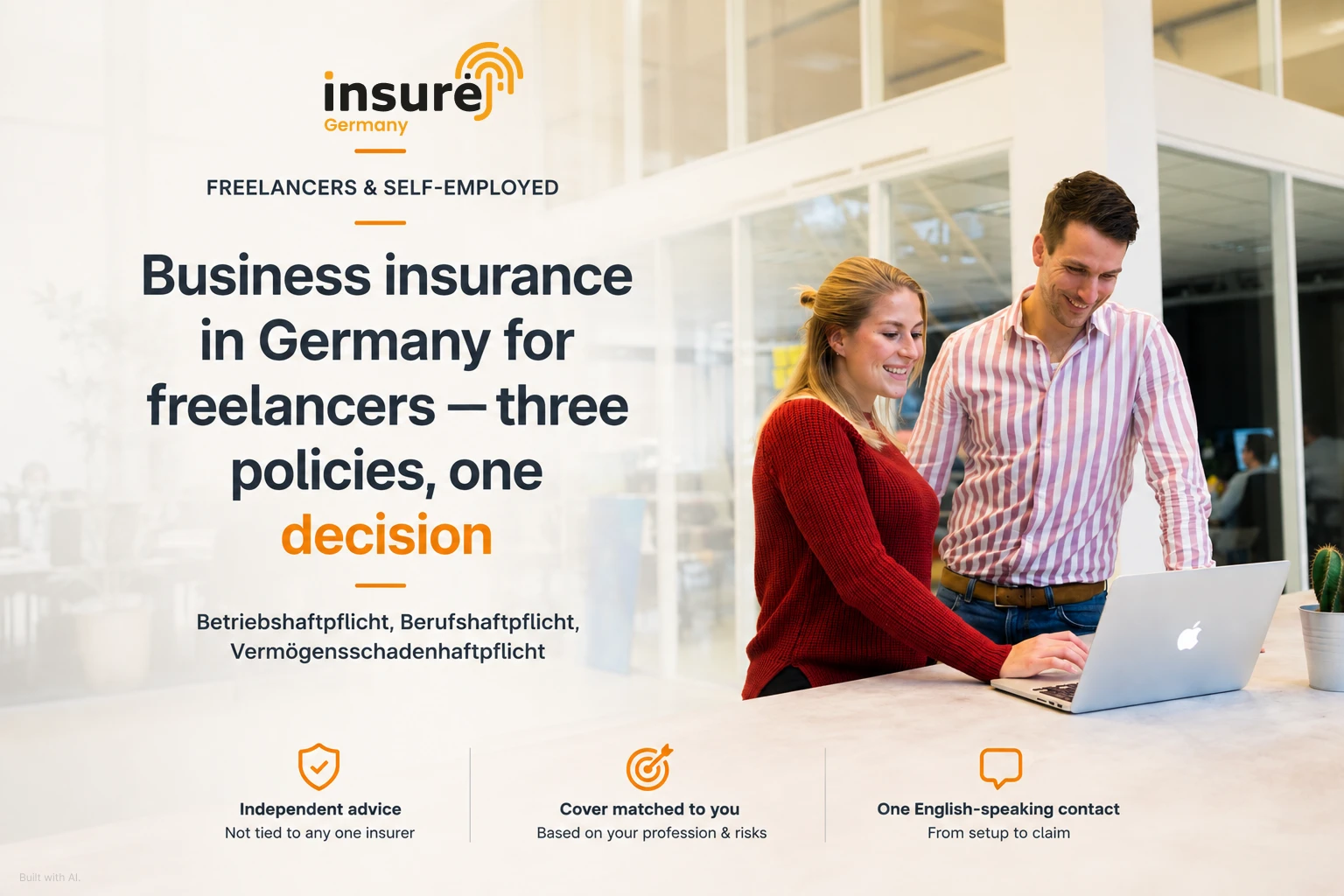
Business-Versicherung →
Schützen Sie Ihr Unternehmen vor den Risiken, die mit einer Unternehmensführung in Deutschland einhergehen.

Tierkrankenversicherung →
Deckt Tierarztkosten, Behandlung und Operationen ab — je nach gewähltem Versicherungsumfang.

Krankenversicherung für Expats →
Gesetzlich vs. privat, erklärt — und auf Englisch eingerichtet.

Private Altersvorsorge →
Bauen Sie sich eine langfristige Altersvorsorge in Deutschland auf — mit einem Plan, der zu Ihrem Leben und Ihren Zielen passt.

Rechtsschutzversicherung →
Erhalten Sie finanziellen Schutz bei Rechtsstreitigkeiten rund um Arbeit, Wohnen, Verkehr oder den Alltag in Deutschland.

Privathaftpflicht →
Schützen Sie sich vor teuren Forderungen, falls Sie versehentlich jemanden verletzen oder fremdes Eigentum beschädigen.

Bringen Sie Ihre Haftpflichtversicherung in Ordnung — richtig
Vereinbaren Sie ein kostenloses 30-minütiges Gespräch und erhalten Sie eine ungebundene, englischsprachige Empfehlung für die Privathaftpflichtversicherung in Deutschland — mit dem passenden Versicherungsschutz zum richtigen Preis.